Not Logged In
Education is not to be finished
You have been logged out. Please log in to continue.
Notifications
No notifications yet
We'll notify you when something new arrives
Showing results for ""
We found 14 matches that match your search

Anyone who is just starting their journey into the world of programming, this course will help them get familiarized with the building blocks such as loops, variables, and conditions. This course helps students cover the basics like synchronization, sequencing, and learning about the scratch interface to bring their ideas to life.

Entrepreneurship is more than a buzzword or a lemonade stand. It is a mindset that helps children spot opportunities, make decisions, plan and execute ideas, and build confidence. This practical, hands-on program builds Financial Literacy while developing problem solving, planning, decision making, teamwork, and execution through fun weekend sessions — truly Entrepreneurship for kids.
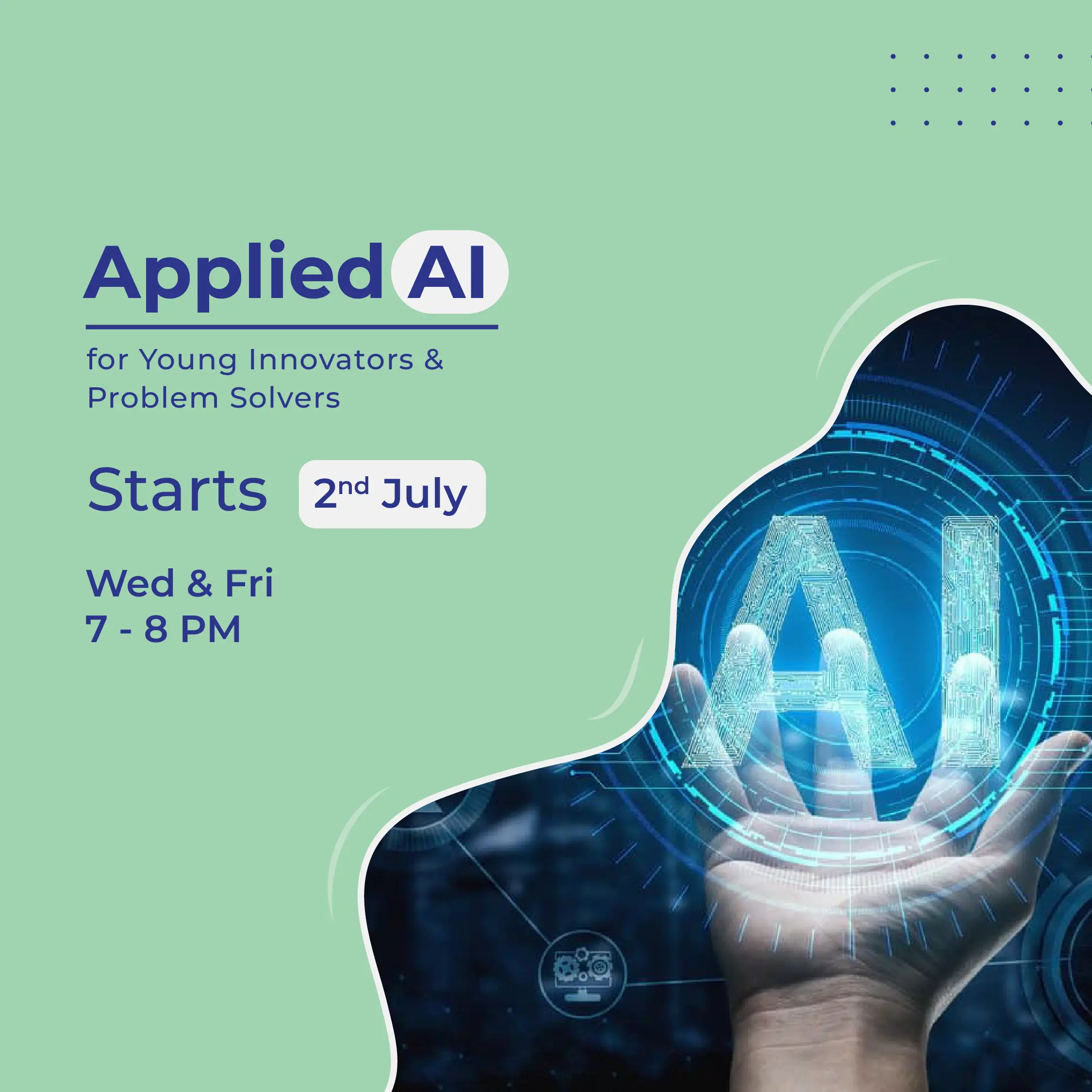
This course invites young learners into the world of Artificial Intelligence with a hands-on, project-based approach. Through interactive sessions, students will explore how generative AI tools like ChatGPT, DALL·E, and image generators work, how to craft precise prompts, and how to build meaningful AI-powered projects. They’ll also reflect on how AI affects the world around them and the ethical decisions that come with using such powerful tools.

Unity is a professional game development tool that uses C# programming. While game development is a power hook for kids to be interested in programming, it is also a highly valuable skill in the modern world. This course builds a gradual understanding of the software by making 2D and 3D scenes, and terrains, using online assets, and writing scripts.

This EduBlocks course is designed for beginners, particularly younger students transitioning from block-based coding to text-based programming. Using EduBlocks, students will learn the basics of coding while working on creative, interactive projects that build their understanding of logic, control structures, and variables in a fun, hands-on environment. The course will be less challenging than a typical Python Level 1 course, focusing on playful learning and practical application through colorful visual arts and interactive projects.
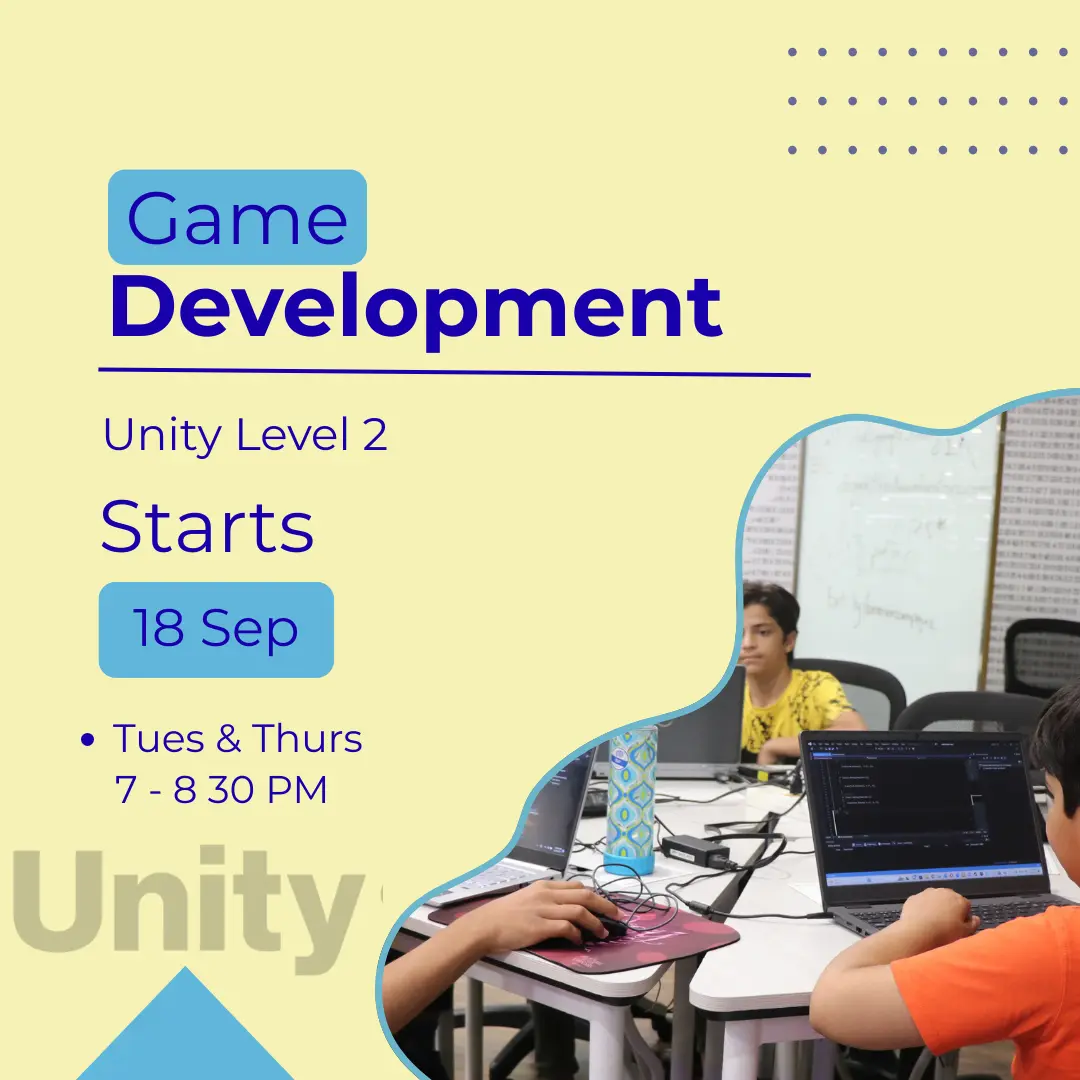
If you think you have unity figured out, take another shot at creating a first person shooting game. It would be ideal if you learn version control and how to keep all your files organized for a large project. We will cover all this while also learning about some more topics such as Raycasting, ScriptableObjects or Multi-threading. This course takes us one step further in developing capabilities for finding useful resources for our unity projects and learning from unity forums.

In today's digital world, websites are the cornerstone of online presence. Whether it's a personal portfolio, a business platform, or a fun online game, understanding web development empowers you to create engaging experiences for users. This course is designed to equip you with the fundamental skills to build web applications from scratch. You'll learn the core languages of web development: HTML, CSS, and JavaScript, the building blocks that bring websites to life. But this course goes beyond just learning syntax. We'll focus on practical application, guiding you through the process of creating a web app from concept to completion.
Once you are comfortable with the syntax of Java-like languages, you are ready to see how programming and electronics go hand in hand with an arduino to build projects like a Home Automation system, Simon says game, Traffic lights controller or maybe a bluetooth controlled car. This course also covers using tools like soldering and a drill, and building craft to make a toy motorbike.

Python Level 2 delves deeper into advanced computational concepts, building upon the foundational knowledge gained in Level 1. Students will explore the use of AI in writing code and create a GUI interface for login and signup. The complex projects at this level will allow the students to experience and learn <b>Replit & AI</b>, <b>file handling</b>, <b>recursion</b>, and <b>pixel manipulation</b>. By mastering these complex topics, students will develop a strong understanding of Python programming and its practical applications in fields like <b>app development</b>, <b>computer vision</b>, and <b>data analysis</b>.

We designed this course in a way to keep kids interested in programming because they will also be building colorful visual arts to see the practical implementations of their work in the software called Processing. It helps in an easier transition from the colorful block-based programming to black and white text based languages.

Few people dare to take on the challenge of Scratch Level 3, where we’ve moved far beyond topics like variables, and loops. Here we introduce our students to complex problem-solving through recognizing and generating patterns, thinking on multiple levels through recursion, recording the state of a program, and handling a mega project through modularization

While Scratch Level 1 is all about giving students the tools to get started with programming, Level 2 sharpens their problem-solving skills by diving into complex programs. Here we grow our toolset by learning to make our favorite sprites using Vector Art, using them in making multi-level games and learning about concepts like acceleration, abstraction, and lists.

Building on concepts from Python Level 2, this advanced level integrates data handling, file I/O, algorithms, and problem-solving through creative, project-based learning. The focus will shift toward structured problem-solving, algorithmic thinking, and data manipulation, preparing students for advanced Python topics such as AI, recursion, and data science. This course empowers students to move beyond visual code and start thinking like developers.
Build real mobile apps using MIT App Inventor. Students learn app design, UI logic, variables, events, data handling, sensors, and testing through hands-on projects.