Not Logged In
Education is not to be finished
You have been logged out. Please log in to continue.
Notifications
No notifications yet
We'll notify you when something new arrives
What Homeschool Parents Often Miss When Starting STEM
 0·Arfaa Ahsan·Feb 18, 2026·6 min read
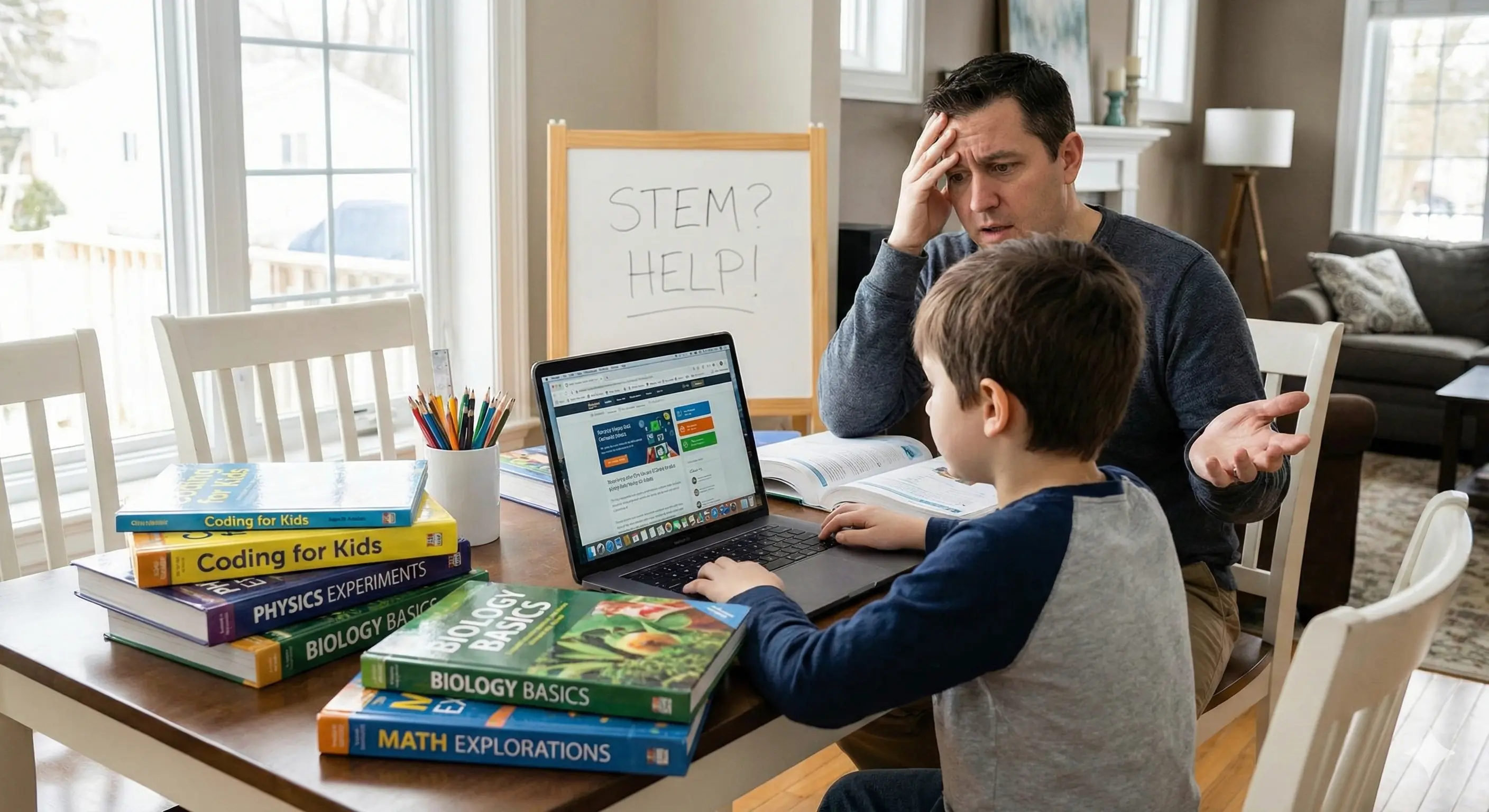
Homeschooling is amazing. You get flexibility, freedom, and the chance to tailor learning exactly to your child’s pace. But when it comes to homeschool STEM for beginners, a lot of us get stuck — not because we don’t care, but because we simply don’t know what to look for.
Honestly? Many homeschool parents miss key things when starting STEM education at home — and that can make this part of homeschooling feel harder than it needs to be.
Understanding STEM Education in a Homeschool Setting
First things first: STEM isn’t just worksheets and tests. In a homeschool setting, it’s all about real-world problem-solving, curiosity, and hands-on discovery. Most of us think STEM means “math + science” — but in reality, STEM is creativity, curiosity, real life, imagination, and exploration all rolled into one.
And the best part? You don’t need fancy equipment to make it work.
Mistake #1: Rushing Into the Hard Stuff
One of the most frequent homeschool STEM curriculum mistakes is starting too advanced, too soon. We want our kids to be geniuses, so we jump straight to complex coding or high-level math.
The Fix: Focus on foundational curiosity.
If they don't understand why a bridge stays up, don't make them calculate the physics of it yet. Use hands-on homeschool STEM activities like building with marshmallows and toothpicks first!
Mistake #2: Thinking "STEM" Only Means "Science and Maths"
It’s easy to get hyper-focused on the "S and M" and forget the rest.
The Fix: Try to blend them.
Mix some "kitchen chemistry" with your measurement lessons. When you show how math helps you bake a perfect batch of brownies, it suddenly becomes relevant. It's a mixture of all concepts. A balanced approach makes learning meaningful and engaging.
Mistake #3: Missing Out on Hands-On Learning
If there’s one thing I’ve learned, it’s that reading about science is great, but doing science is what makes it stick.
The Fix: Incorporate more hands-on activities.
This doesn't mean you need a lab. Use household items!
- Kitchen Chemistry: Vinegar and baking soda volcanoes never get old.
- DIY Weather Station: Track rain with a plastic bottle.
- Nature Science: Identify bugs in the backyard.
Mistake #4: Thinking You Have to Be an Expert
You don't need to be an engineer to teach engineering! In fact, it’s actually better if you aren’t.
The Fix: Learn with them.
When your kid asks a question you can't answer, say, "I don't know, let's find out!" This models lifelong learning, which is the heart of a STEM mindset.
Mistake #5: Misunderstanding "Technology"
In 2026, technology isn't just about "screen time." It’s about creation.
The Fix: Be a creator, not a consumer.
Instead of just watching videos, look into screen-free coding games or basic logic puzzles. It’s about teaching them to be creators of tech, not just consumers.
How to Navigate Through Homeschooling: How to Start
If you're wondering how to start homeschooling STEM today, start small. You don't need a 36-week lesson plan by Monday.
- Observe: What is your child already curious about? (Lego? Baking? Insects?)
- Connect: Find one STEM concept related to that interest.
- Explore: Find a simple, hands-on activity to test it out.
The Bottom Line
At the end of the day, STEM success isn't about a test score. Did your child ask a good question today? Did they try again after a "build" fell over? That’s the real win.
Homeschooling is a journey, not a race. Stay curious, keep it hands-on, and you'll do great!
Subscribe to our newsletter to get all new updates!