Not Logged In
Education is not to be finished
You have been logged out. Please log in to continue.
Notifications
No notifications yet
We'll notify you when something new arrives
Pattern Recognition: The Computational Thinking Skill Hiding in Plain Sight
Here's something most parents don't realize: your child is already really good at "pattern recognition." It just doesn't look like a school subject, so it's easy to miss. It's what's happening when they notice that every level of their favorite game gets a little harder in the same kind of way or when they realize a LEGO set keeps reusing the same handful of brick combinations. That's pattern recognition: spotting something that repeats and using it to figure out what comes next. It's one of the core building blocks of how programmers think. And the good news is, you don't need to teach it to your child from scratch. It's already there. STEM education just gives it somewhere useful to go.
So what exactly is pattern recognition?
In simple terms, it's the skill of noticing when something repeats a shape, a sequence, or a routine and using that to predict or simplify what happens next. You already see kids do this all the time: Knowing exactly which song comes next on a playlist because it always plays in the same order, Predicting an enemy's next move in a game because it always follows the same pattern, Guessing how a story ends because it "feels like" other stories they've read, this instinct becomes incredibly useful. Instead of a child writing the same set of instructions five separate times, they start to notice: "wait, I keep doing the exact same thing," and that's the moment they're ready to learn a smarter, more efficient way to write lines of code or anything else that they are building in that regard. What matters is they ask themselves: "how can I make this simpler and more efficient".
Why this matters more than memorizing
Here's the honest truth: a child who's just memorized what a "loop" is hasn't really learned to code yet. But a child who says "I keep repeating myself here, there must be a shortcut" before they even know the word "loop" has learned the way programmers actually think. That instinct is what sticks. It carries over to any coding language they pick up later, not just the first one they happen to learn.
Where you'll actually see this play out
Building a simple animation or game, kids quickly notice the same steps show up again and again, move, check what happens, react and start reusing that instead of rebuilding it every time. In game design specifically, this skill is everywhere: enemies that repeat the same behavior, levels that get harder in a predictable way, animations that loop. Once a child notices these patterns, they're already halfway to building their own.
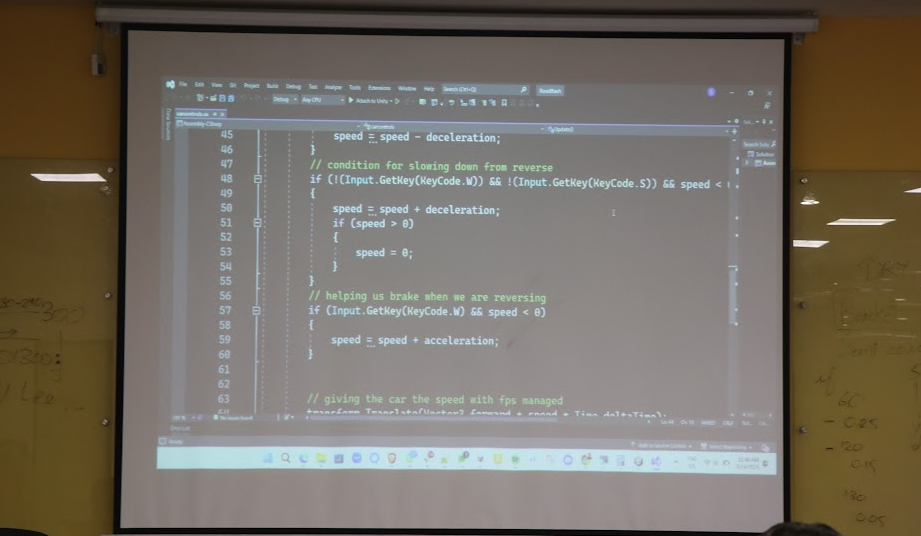
Computational thinking and Pattern Recognition and why it matters?
Computational thinking is the process of breaking a problem down into pieces. It's built on four core habits: decomposition (breaking a big problem into smaller, manageable parts), pattern recognition (spotting similarities or repetition that make a problem easier to solve), abstraction (filtering out irrelevant details to focus on what actually matters), and algorithm design (creating a clear, ordered set of steps to reach a solution). Despite the name, none of this requires a computer at all it's a way of thinking that shows up just as naturally in following a recipe, organizing a messy room, or planning a route across a city as it does in writing a line of code.What makes computational thinking so relevant today isn't that everyone needs to become a programmer it's that this style of structured, logical problem solving has quietly become the operating system behind almost every modern field. A doctor diagnosing a patient is running through decomposition and pattern recognition. An engineer designing a bridge is thinking in algorithms. A student organizing a research project is practicing abstraction, even if no one ever calls it that. In a world increasingly shaped by data, automation, and AI, the ability to think this way isn't a niche technical skill anymore it's closer to literacy and not lacking behind.This is also why computational thinking matters so much for how kids are educated right now. The jobs today's students will eventually hold, many of which don't exist yet, will almost certainly require comfort with technology, data, and systematic problem solving, regardless of the specific field. A child who learns to break down a complicated problem, notice patterns, and build a step-by-step plan to solve it isn't just getting ready to code they're building a mental toolkit that transfers to nearly everything: writing an essay, running a science experiment, managing a budget, or troubleshooting something that's broken. That kind of adaptability is exactly what the 21st century rewards, far more than memorized facts ever will.
Simple ways to build this skill at home, no screen required
Here are some simple, everyday ways to build both skills, without needing a computer at all:For pattern recognition, start with everyday noticing games. Have your child predict what comes next in a song, a striped pattern, or a sequence of shapes even simple "what comes next" puzzles train the brain to look for repetition and structure. Board games and card games are especially good for this, since so many of them rely on recognizing a repeating turn structure or an opponent's strategy. Cooking is another underrated one: noticing that a recipe always follows the same rough order (prep, combine, cook, finish) is pattern recognition in action. Even something as simple as sorting laundry by color or type, or noticing that the school week always follows the same rhythm, quietly reinforces the same mental muscle.For computational thinking more broadly, the easiest entry point is turning ordinary tasks into "explain it step by step" exercises. Ask your child to give you exact instructions for making a sandwich, then follow them literally if you end up trying to spread jam with an unopened jar because they forgot to say "open the jar first," that's a real, memorable lesson in why precise, ordered steps (algorithms) matter. Packing a school bag, planning a weekend, or even giving directions to a room in the house all work the same way they force a child to sequence steps logically and notice what happens if one is missing or out of order. and as for;
- Decomposition (breaking big problems into smaller ones) is easy to practice with anything that feels overwhelming at first glance — cleaning a messy room, planning a birthday party, or building something out of LEGO. Instead of jumping straight in, ask "what are the smaller pieces of this problem?" before starting. This same habit is exactly what makes a big coding project or a big school assignment feel manageable instead of paralyzing.
- Abstraction (focusing on what matters and ignoring the rest) can be practiced through simple summarizing games — asking a child to describe a movie, a book, or their day in one sentence forces them to decide what's actually essential and what's just detail. Map-reading is a great real-world example too: a map leaves out almost everything about a place except what's needed to get around, which is abstraction in its purest form.
The common thread across all of these: none of them require a screen. The goal is to get kids comfortable noticing patterns, breaking things down, and thinking in clear steps in low stakes, everyday moments so that when they do sit down to code, build a robot, or design a game, that thinking style already feels familiar rather than brand new.
0 Comments
You must be logged in to share a comment. Click here to Login
No comments yet. Be the first to start the conversation!