Not Logged In
Education is not to be finished
You have been logged out. Please log in to continue.
Notifications
No notifications yet
We'll notify you when something new arrives
Miss Maker Maydda: The Educator Quietly Building the Maker Movement in Pakistan
With the boom of robotics and then AI in education, trends have shifted fast. Everyone is scrambling to add these subjects, rebrand their curriculums, and keep up. But in all of this, the right guidance still largely lacks and that is exactly the gap Maydda Nabeel stepped into, except she did it before any of this was even a conversation. So Maydda reframed the whole situation from back in 2018, robotics wasn't a career path in Pakistan. It wasn't even really a trend. The word existed, mostly referenced in conversations about what was happening in the Netherlands or America, but locally there were no job opportunities tied to it, no structured pathways, and very little momentum. That is when Maydda found herself at Robotics Club Pakistan, incubated at NICL doing what everyone does at an early-stage startup: wearing every hat at once. Marketing manager, instructor, organizer. All of it, simultaneously. That summer, a camp happened at NICL. And the number of kids who showed up? Beyond what anyone expected. At the time, Lego WeDo kits were the only real option available, but that didn't matter because curiosity was already there. The kids were already there. Maydda just had to meet them. That camp was only the beginning of what was next to come. What followed was a career spent building and working inside some of the only real makerspaces in Lahore before most people in Pakistan even knew what a makerspace was.
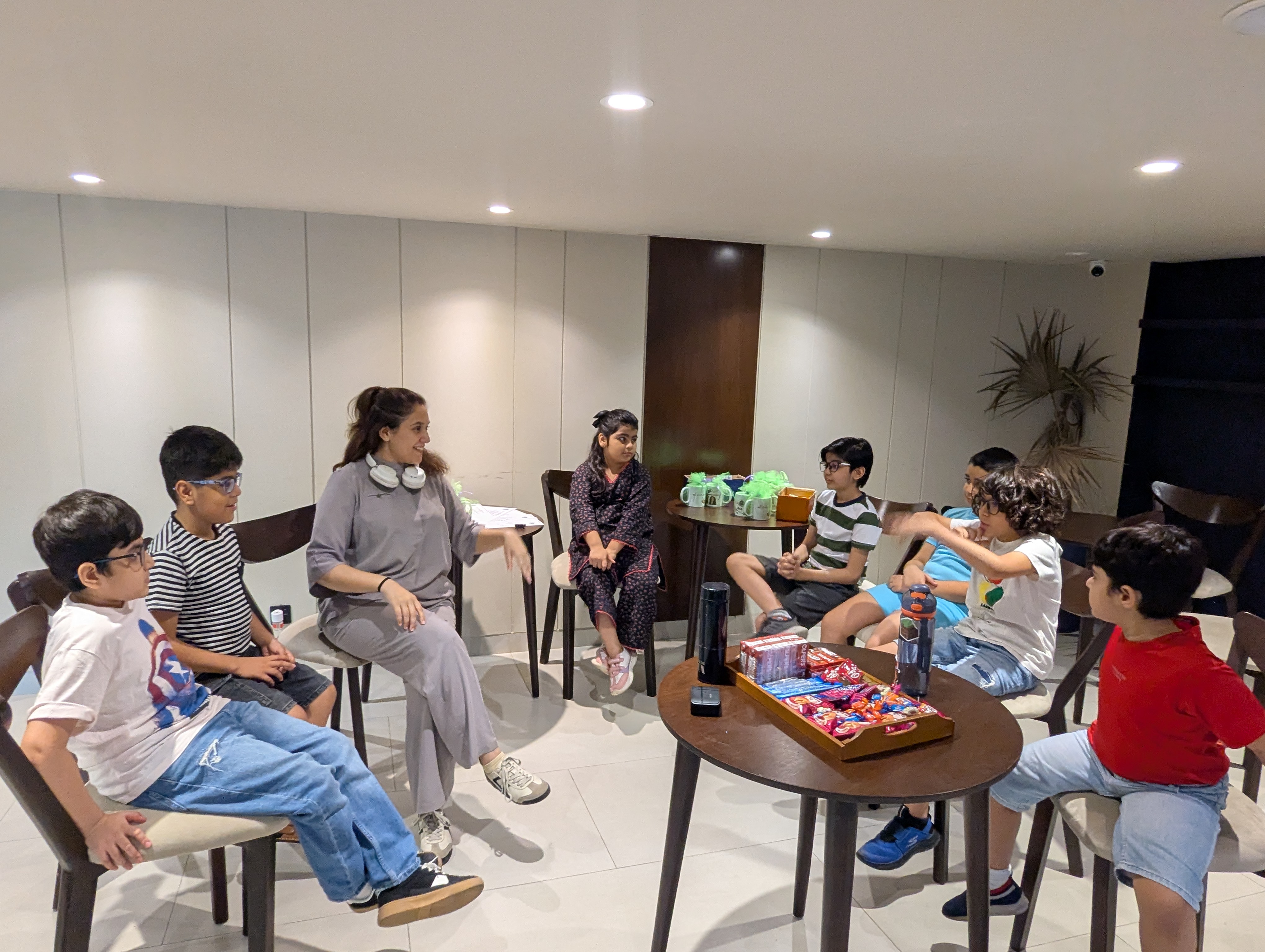
What even is a maker?
Before going further into her story, it helps to understand the word itself because "maker" gets thrown around a lot and means different things depending on who you ask. Maydda is a person who fits in the definition of a maker and she describes it very amazingly. “A maker is simply someone who likes to create things and Make stuff. Do it for the sake of doing it. No rigid rules, no fixed definition.” For a long time this has been treated as a hobby, an extracurricular, something outside the scope of serious learning. But the maker mentality is actually at the core of how engineers think, how scientists test, how real problems get solved. And it is exactly what Pakistani education heavily focused on rote learning and exam performance has been quietly starving. For parents reading this: when your child takes apart something just to see how it works, or builds something out of cardboard for no reason, or refuses to stop tinkering with a broken toy, that is the maker's instinct. It does not need to be redirected. It needs space. Maydda recognized this early. And in 2018, before robotics was a career and before AI entered every school's marketing brochure, she stepped into that gap.
The Academic Detour That Actually Made Sense
This passion for exploring led her to enroll in an MPhil at SOE (School of Education at LUMS). Her core subjects covered philosophy of education and research, but every elective she picked was EdTech. Computers and Cognition, Human-Computer Interaction, UI and app design. Whatever EdTech subject she could get her hands on, she took it. It was, in her words, very eye-opening, a chance to understand how far you can actually look into things when you have the theoretical tools to go deeper.
First Step Into a Makerspace in Lahore
The theory eventually led her into the thing itself. She joined Leo's Workshop as a Maker Space Facilitator, and what she walked into she describes as a dream studio for any teacher, a fully equipped lab with 3D printers, Arduinos, carpentry tools, sensors, and the works. For anyone thinking about STEM education in Pakistan, this is what a real maker environment actually looks like not a computer lab with locked cabinets, but a working, messy, hands-on space. With that lab, there was just one problem she discovered; it didn't have a proper person. For Maydda, that wasn't a problem. That was an opportunity. Her response to walking into that lab was straightforward: “This place opened my eyes, and it was a dream studio, one shouldn't leave from here. The sky is the limit.” She stayed, taught, and experimented until she felt she had learned what that space had to offer. Then she made a decision that defined the next chapter: the goal wasn't to keep teaching. It was to start building. Creating spaces and opportunities for kids who didn't have access to either.
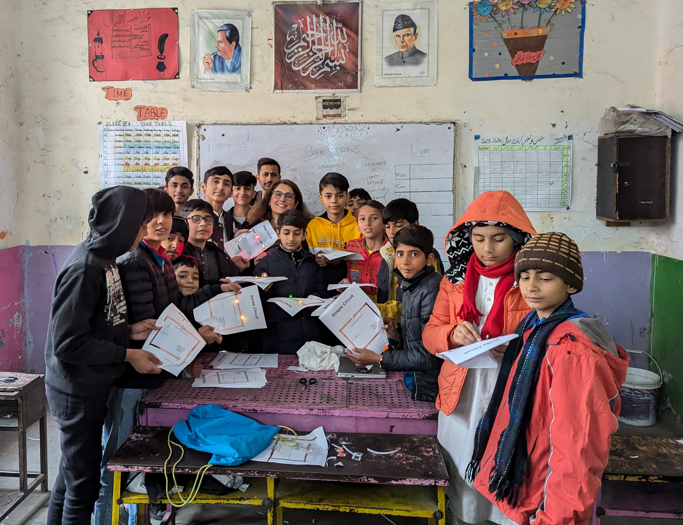
Working towards STEM curriculums
That decision brought her to her next teaching journey, where she eventually moved into curriculum development, designing a hands-on STEM curriculum for kids from Grade 1 to Grade 8 and introducing dedicated STEM lessons into the school timetable. Then came the teacher training and here is where the story gets honest. Teachers who had spent years confidently owning their single subject were now standing in front of circuits and robots they had never touched. Stepping into the unknown can be daunting, and without the right support, it is easy to feel overwhelmed.
As Maydda puts it:
"The overwhelm was real, and that's exactly why providing proper training is what makes the difference between feeling lost and feeling completely prepared.
Keeping teachers emotionally regulated through that process, making the training feel approachable instead of threatening, repeatedly reassuring them that yes, they could do this was one of the most exhausting parts of the work. . Six months later, those same teachers were independently seeking out STEM courses on their own. That, more than any project or lesson plan, was the real result. That shift, for Maydda, was the real win.
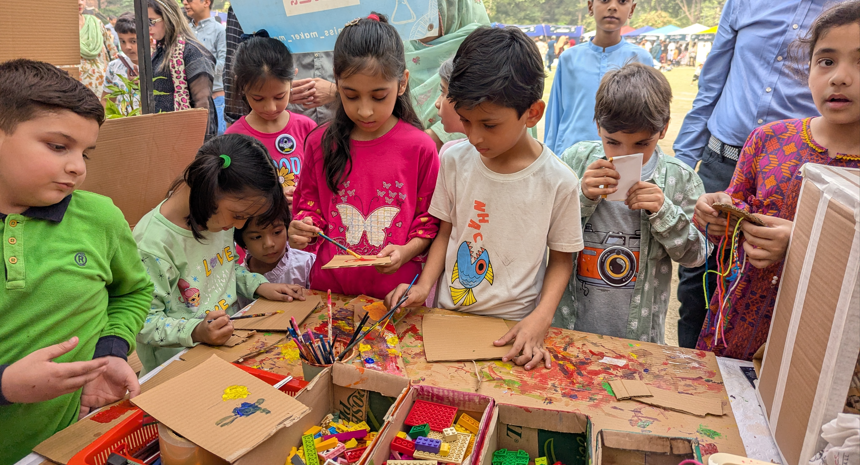
Who Is Miss Maker Maydda — And What She'd Tell You
Maydda is an educator who moves between worlds most people keep separate, maker culture, formal pedagogy, teacher training, community building. What ties it together is a straightforward belief:
“if you care about something, you show up for it consistently, you share it honestly, and you let the rest follow.”
That is the whole philosophy. And it applies differently depending on where you are standing.
If you are a parent reading this:
When I asked Maydda what she wished someone had told her earlier, her answer was more honest than most people would be. She said she started out assuming that because she was passionate about making and building, her kids would naturally be too. That turned out not to be true and the realization was important. The child you are imagining is often the child you once were, the one who never got access to these things. Your actual child in front of you has their own instincts. The best thing you can do is stay curious about what those are, rather than arriving with an answer already decided. That distinction matters. It keeps you from projecting your enthusiasm onto kids who have entirely different interests. It keeps you honest about who you are actually doing this for. Find educators who will be honest with you when something is not the right fit that honesty is worth more than enthusiasm.
If you are an educator:
Look for evidence over credentials when building your own practice or finding collaborators. Anyone can speak confidently about STEM. Look for people who are actively making things, showing their process, sharing what did not work. That consistency is the real indicator. And when you are in the room with teachers or kids who are panicking, stay and help. The regulated person in the room is doing more than the most prepared lesson plan ever could. For anyone figuring out where to start: show your failures publicly. Do not wait until things are polished. Ask for help out loud. A community forms organically around people who are honest about where they are in the process. Create. Make. Show it. Keep going.
Maydda’s work
If you want to follow Maydda's work or reach out to her directly:
And if you are looking for a community where educators like Maydda are part of your learning journey at every step, join us here:
0 Comments
You must be logged in to share a comment. Click here to Login
No comments yet. Be the first to start the conversation!