Not Logged In
Education is not to be finished
You have been logged out. Please log in to continue.
Notifications
No notifications yet
We'll notify you when something new arrives
The Maker Movement in Pakistan: Why It Matters More Than Ever
Education works best when we practice it, not just memorize answers and facts. A decade ago, it was a rare sight to see kids get hands-on learning experience in Pakistan. The idea of children building robots, programming microcontrollers, or designing inventions in a classroom sounded futuristic. But today, that reality is slowly taking shape. Across schools, learning centers, and technology clubs, a new generation of young Pakistanis is discovering the joy of making things with their own hands. As STEM education in Pakistan continues to evolve, hands-on learning experiences such as robotics and maker activities are becoming increasingly important. The maker movement is a cultural and educational initiative that encourages people to become creators rather than consumers of technology through hands-on learning and experimentation. It emphasizes learning through building. But to understand why the maker movement matters in Pakistan, we first need to understand why it emerged globally.
Why the World Needed Makers Again
In developed countries, education and employment trends gradually shifted toward management, finance, and leadership roles. Universities produced a great number of graduates trained to manage businesses, analyze markets, and lead teams. While these skills are valuable, they created a gap. If everyone wants to lead, who will build? The maker movement emerged partly as a response to this problem. It encouraged students and professionals to become inventors, builders, and experimenters rather than just consumers of technology.
Pakistan Doesn't Lack Makers, It Lacks Recognition
Unlike many developed countries, Pakistan has never lacked people who can make things. Walk through a local workshop in areas such as Hall Road in Lahore, or through countless industrial markets across the country, and you'll find technicians, fabricators, electricians, and mechanics capable of producing remarkably sophisticated solutions with limited resources. Need a custom robotic frame, a mechanical component, or an electronics enclosure? Someone can build it for you, affordably, right away. So the challenge isn't a lack of makers. It's a lack of recognition and incentive for making. For many young Pakistanis, pursuing technical skills doesn't necessarily lead to the same success and rewards associated with management, business, or corporate careers. Students often look at engineers, technicians, and educators and conclude that years of technical training may not result in the same opportunities available in other professions. As a result, many talented individuals move away from creating and toward careers that appear more financially secure. This creates a different kind of deficiency, not a shortage of technical ability, but a shortage of people willing to invest their time and talent in creating new things.
Why Making Takes Patience, And Why That's Hard
Making takes time. Building a robot, developing a prototype, designing a product, or engineering a solution requires experimentation, failure, redesign, and testing. These are slow processes in a world increasingly focused on speed and instant results. A maker may spend months developing a prototype before seeing any tangible outcome. Yet funding cycles, project deadlines, and institutional expectations often demand immediate results. When success is measured in weeks rather than years, experimentation becomes difficult. This is why maker culture requires patience, not just from makers themselves, but from educators, institutions, investors, and government too. If Pakistan wants to encourage innovation, it must create environments where experimentation is valued and failure is understood as part of the process. Students should be encouraged to build, test, break, and rebuild without the constant pressure of immediate success.
How Robotics Education in Pakistan Has Changed
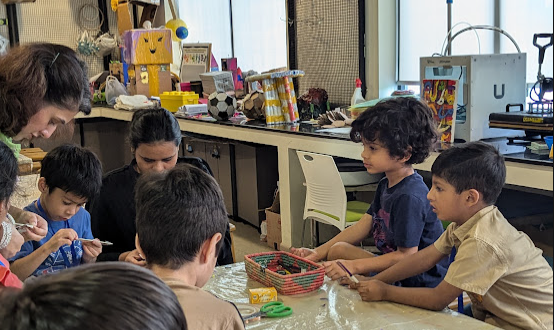
Educators such as robotics instructor Miss Maker Maydda have witnessed this shift firsthand. When she first began teaching robotics, the field was largely unfamiliar. Today, however, more children are showing interest in building and creating. They're curious about how technology works, and increasingly eager to develop projects of their own. That curiosity matters.
The Inner Child Behind the Teaching
This article draws on conversation with robotics educator Miss Maker Maydda, who has spent years introducing Pakistani children to hands-on learning. She spoke about what motivates her to keep teaching, experimenting, and building. For a long time, she believed she was doing it solely for children. Like many Pakistani parents, she wanted to pass on knowledge that she herself had discovered later in life. The excitement of watching a child learn became both her passion and her purpose. But over time, she realized something deeper. "I think it's my inner child that wants to learn this," she reflected. Growing up, many of us didn't have access to robotics kits, maker spaces, coding clubs, or adults who encouraged us to take things apart just to understand how they worked. Curiosity often had to make room for practicality. We were taught to pursue stable careers, prepare for exams, and avoid failure. There wasn't always time or space to simply explore. For her, teaching robotics became a way of giving that younger version of herself the opportunities she never had.
Every Child Is Not the Same, And That's the Point
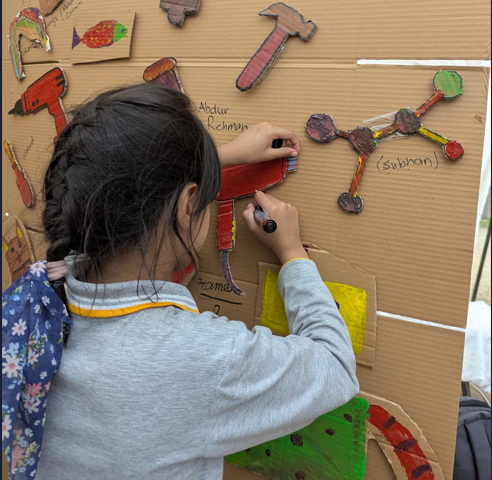
Initially, she assumed that because she found joy in making and creating, her own children would naturally share the same interests. And they did. But the experience also challenged another assumption: not every child is the same. As parents, we sometimes fall into the illusion that our children are extensions of ourselves — that what excites us will excite them too. Yet children arrive with their own personalities, curiosities, and passions. Some are drawn to robotics immediately. Others discover excitement elsewhere. The role of an educator, then, is not to force passion but to recognize it when it appears. The children who connect with making find their way to it. They stay after class to ask questions. They lose track of time while building. They become fascinated by how sensors work, why a motor behaves a certain way, or how a simple idea can become a working prototype.
The Real Challenge Isn't That Kids Hate Making
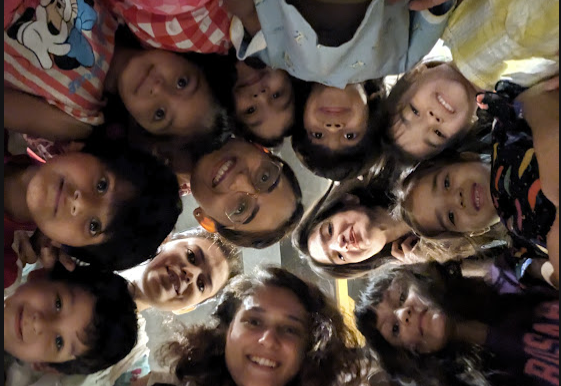
The real challenge is not that children hate making. It is that making demands time. Passion requires patience. Curiosity requires space. Building something meaningful often means repeating experiments, making mistakes, redesigning, and trying again. In a world increasingly shaped by instant gratification and constant distractions, giving sustained attention to one thing has become difficult.
What the Maker Movement Really Teaches Us
Ultimately, the maker movement in Pakistan is not just about robots or engineering. It is about protecting our ability to remain curious. It is about allowing children, and ourselves, to ask questions without immediately needing answers. It is about nurturing the part of us that still wants to take things apart, understand how they work, and imagine how they could be better. In many ways, every maker is simply an inner child who never stops wondering, "What happens if I try?"
0 Comments
You must be logged in to share a comment. Click here to Login
No comments yet. Be the first to start the conversation!